
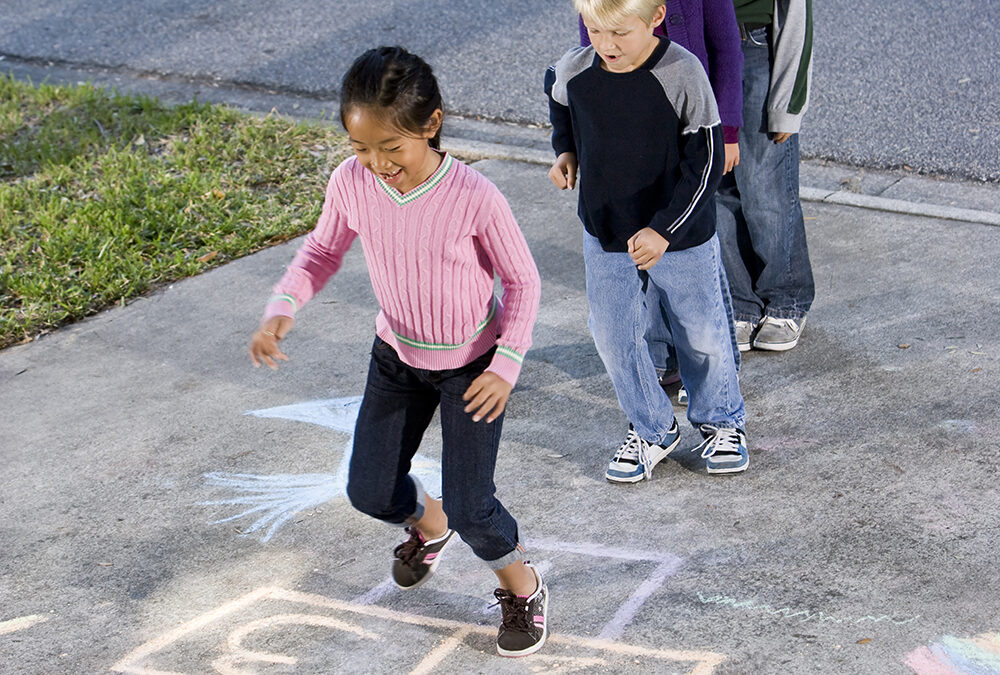
Commonly referred to as being “pigeon toed,” in-toeing is when a child walks with his or her feet turned inward. In-toeing can cause a child to seem more clumsy, demonstrate poor balance, and to trip and fall more frequently than peers. The cause of in-toeing can be the result of a few different factors.
- In-toeing can be due to the ankles and/or feet themselves being curved inward
- In-toeing can be the result of tibial torsion where the bones in the calves twist inward causing the feet to appear to turn inward when walking.
- In-toeing can be the result of femoral torsion where the long bones of the thigh twist inward causing the knees and feet to point inward.
- In-toeing can also be the result of shortened muscles in the ankles or hips.
 As mentioned in last month’s blog on W-sitting, when children sit in a W this can result in shortened muscles in the hips which can lead to in-toeing. Children who chronically sit in a W create excessive range of motion in their hips in one direction, while also creating a decreased range of motion in their hips in the opposite direction. This imbalance in the muscles surrounding the hips can make them very tight and can cause the entire leg to turn inward.
A physical therapist can help by assessing a child to determine which of these problems are causing the in-toeing. Depending on the cause of the problem a physical therapist will recommend the proper course of action, which may include:
- Stretching for tight muscles.
- Strengthening for weak muscles.
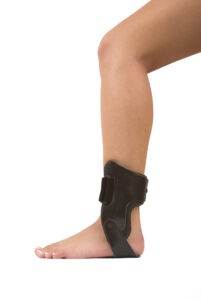
- De-rotation bands, which are elastic bands that help reposition in the legs in proper alignment.
- Eliminating W sitting in favor of sitting in criss-cross.