
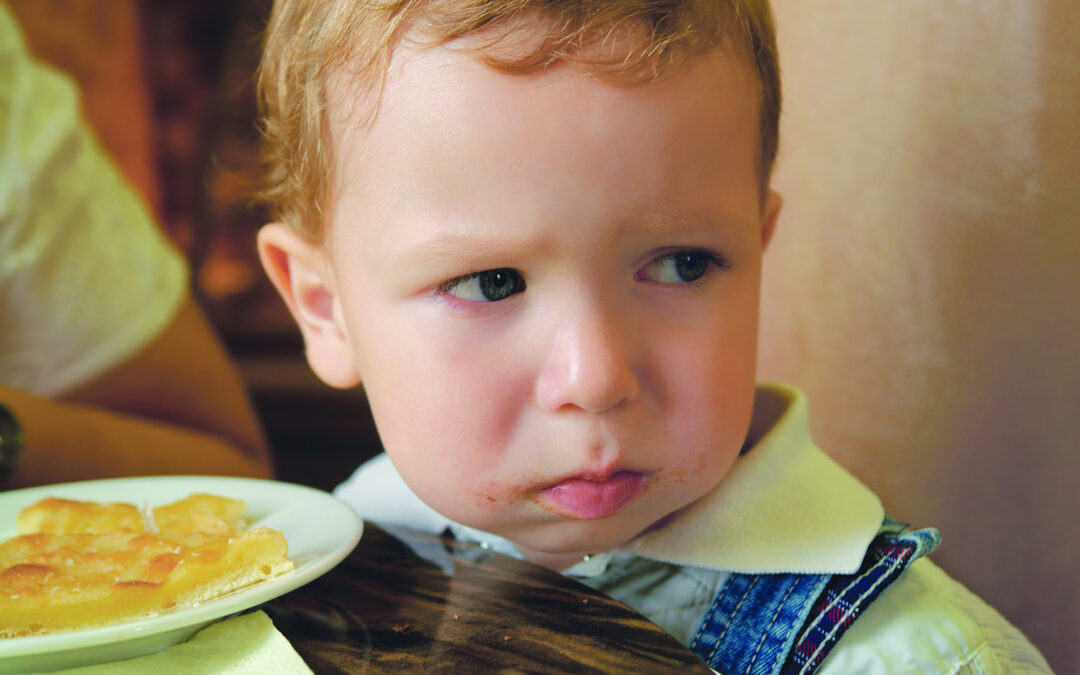
 Eating is easy! You just sit down and eat, right? WRONG. Believe it or not, eating is more difficult than walking or talking. It involves 31 muscles and 6 cranial nerves to produce a single swallow. In addition, it involves all the major organs of your body and all 8 sensory systems working in perfect harmony. There are hundreds of thousands of families throughout the United States that have experienced eating and feeding problems in infants and children. Feeding and eating problems are very common and challenging. Eating can be extremely painful or impossible for some infants and children. What if your baby or child struggled to eat, and every bite became a challenge or fight complicated by coughing, choking, gagging, retching, and vomiting or food refusal? For families with infants or children who have feeding challenges, every meal is a difficult battle.

Prolonged untreated feeding disorders can result in disruption of positive meal-time routines. This can lead to disruption in parent-child interaction where less cuddling and positive interactions occur. Eating and feeding difficulties can disrupt many aspects of a child’s life including growth, cognitive development, physical strength, behavior and nutrition. In addition, feeding difficulties produce worried parents and frequent telephone calls and office visits to your pediatrician. There are an estimated 750,000 children nationwide with severe feeding struggles. This number is staggering. However, there is hope and there is help!
You may ask, “How do I know if my child has a feeding problem?” Feeding problems present in many different ways from the need to obtain nutrition via tube feedings to gagging, vomiting, constipation, food refusal and a limited diet. Here are some warning signs that may indicate your child needs help:
- Selective in taste and textures
- Gags, chokes, or vomits with meals
- Refuses entire food groups such as proteins, grains, fruits or vegetables
- Body weight can be either too thin or too heavy
- Refusal to advance onto age appropriate foods
- Gastro-intestinal reflux

At TherapyWorks, we have a qualified team of therapists, including speech pathologists, occupational therapists and a dietitian to assist you and your child in overcoming feeding challenges. Working with your child’s pediatrician, we will evaluate and develop a treatment plan specific to your child’s individuals needs. Our goal is to make feeding fun not only for the child, but also for the entire family. We use a variety of approaches to assist you and your child in overcoming their feeding challenges. Several of our therapists are trained in using the Sensory-Oral-Sequential approach to Feeding (SOS) developed by Kay Toomey and associates. In addition, we use principles from Food Chaining by Cheri Fraker and Laura Walbert and the Get Permission First approach by Marsha Dunn Klein.

Finally, I want to recognize all of the wonderful parents, grandparents, aunts and uncles and foster parents that I have met over the years who have been so dedicated at finding a solution to their child’s feeding difficulties. Your persistence, patience and dedication have contributed to the success we have seen in therapy. Your tears have not been in vain. It is a privilege to share your excitement over your child eating foods they have never eaten before or, for some of you, watching your child eat by mouth when he/she has previously only received nutrition by a feeding tube.